Oklahoma homeowners know that severe thunderstorms, high winds, and hail can arrive quickly. After a storm passes through Oklahoma City, Yukon, Mustang, Edmond, or surrounding communities, many homeowners wonder whether their roofs have been damaged.
The challenge is that hail damage isn’t always visible from the ground. A roof may look normal from the driveway while shingles, flashing, vents, or other roofing components have sustained damage.
At Watson Roofing, we help Oklahoma homeowners evaluate roof conditions, identify visible signs of storm damage, and understand their roofing options.
Here’s what to look for after a hailstorm and when to consider a professional roof inspection.
1. What Does Hail Damage Look Like on Asphalt Shingles?
Hail damage can appear differently depending on the size and density of the hailstones, wind conditions, age of the roof, and type of shingles installed.
Common signs include:
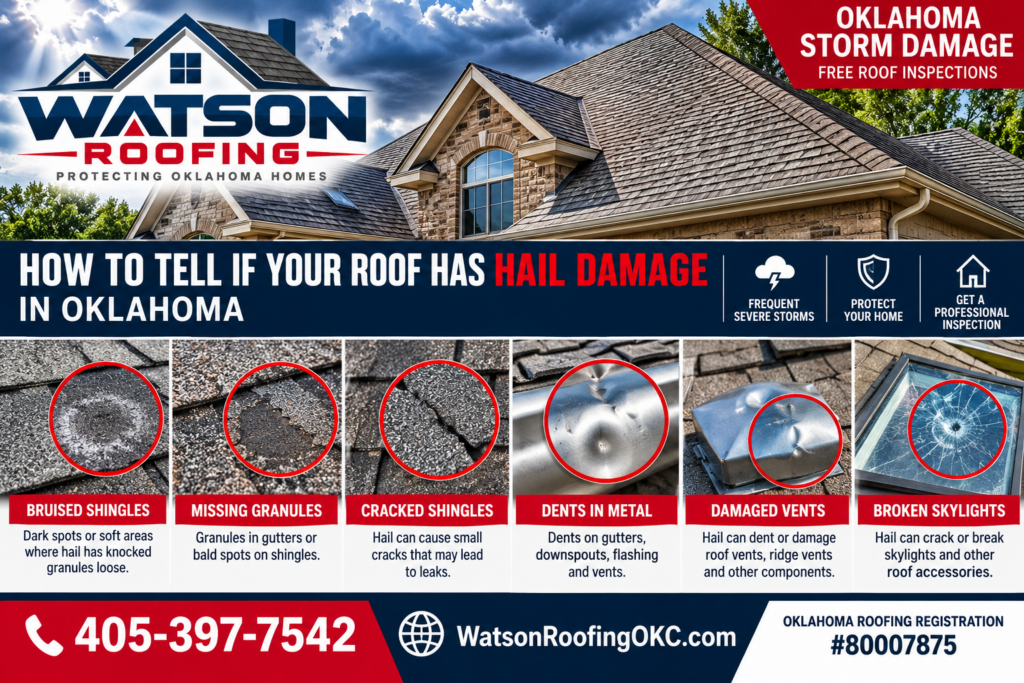
- Granule loss: Areas where protective granules have been knocked away, exposing the underlying asphalt.
- Bruising: Soft or depressed areas caused by an impact. These may require close inspection to identify.
- Cracked shingles: Visible fractures or splits in the shingle material.
- Exposed fiberglass mat: More severe damage may expose the reinforcement beneath the asphalt.
- Displaced or broken shingles: Storm impacts and wind may damage individual shingles or roofing accessories.
Not every dark spot or area of missing granules is caused by hail. Normal aging, foot traffic, manufacturing characteristics, and other conditions can produce similar appearances.
A qualified inspection helps distinguish possible storm damage from ordinary wear.
2. Check Your Gutters and Downspouts
Your gutters may provide useful clues about the severity of a hailstorm.
After the storm, look for:
- Dents in metal gutters or downspouts
- Damaged gutter covers
- Loose or disconnected gutter sections
- Unusual accumulations of shingle granules near downspout outlets
Granules alone do not prove hail damage. Asphalt shingles naturally lose some granules over time, especially as they age.
However, significant new granule loss combined with other storm-related damage may justify a closer inspection.
3. Look for Damage to Roof Vents, Flashing, and Metal Components
Hail can strike more than the shingles themselves.
Metal roof vents, flashing, chimney caps, and other accessories may show dents or impact marks after a storm.
These areas can provide additional evidence of storm conditions, although dents in metal components do not automatically mean the shingles were damaged.
A roofing inspection should consider the entire roofing system, including penetrations, valleys, roof edges, and ventilation components.
4. Inspect Siding, Window Screens, and Other Exterior Surfaces
You may notice storm damage around your home before you notice anything on the roof.
Look for:
- Torn or damaged window screens
- Dents in garage doors or metal trim
- Cracked or damaged siding
- Broken outdoor light fixtures
- Damage to air-conditioning equipment or other exposed exterior components
These observations can help establish that a property experienced significant hail or wind impacts.
Safety tip: Inspect from the ground whenever possible. Do not climb onto a potentially damaged roof.
5. Watch for Interior Water Stains and Leaks
Some storm-related roof damage may eventually lead to water intrusion.
Warning signs inside your home include:
- New ceiling stains
- Water dripping during rainfall
- Damp attic insulation
- Discoloration around ceiling fixtures
- Moisture around roof penetrations
Not every roof affected by hail will leak immediately, and not every leak is caused by hail.
If you discover active water intrusion, take reasonable steps to protect your belongings and arrange for a qualified professional to identify the source.
6. Can Small Hail Damage a Roof?
Yes, under some circumstances.
The likelihood of damage depends on several factors, including:
- Hailstone size, shape, and density
- Wind speed and direction
- Shingle age and condition
- Roofing material and construction
- Roof slope and orientation
There is no single hailstone size that guarantees damage to every roof.
A newer impact-resistant roofing system may perform differently from an older roof with brittle shingles.
That’s why property-specific inspection matters more than relying on hail size alone.
7. Does Class 4 Roofing Prevent Hail Damage?
Class 4 impact-resistant shingles are designed to meet a higher impact-resistance classification under applicable testing than Class 3 products.
However, Class 4 does not mean hail-proof.
Impact-resistance ratings describe performance under specific laboratory test conditions. Actual storm conditions can differ significantly.
Oklahoma homeowners considering roof replacement may want to compare Class 3 and Class 4 options from manufacturers such as Owens Corning, GAF, IKO, CertainTeed, Malarkey, and TAMKO.
Product warranties and potential insurance discounts vary. Ask your insurance provider whether a particular product qualifies for any available discount.
8. Does Homeowners Insurance Cover Hail Damage in Oklahoma?
Many homeowners insurance policies provide some coverage for sudden hail or wind damage, but the actual coverage depends on the policy.
Important considerations may include:
- Whether hail damage is covered
- Your wind or hail deductible
- Actual Cash Value (ACV) versus Replacement Cost Value (RCV)
- Depreciation provisions
- Policy exclusions and limitations
- Requirements for documenting and reporting damage
Normal aging, deterioration, and maintenance-related issues may be treated differently from covered storm damage.
The insurance company determines coverage under the policy. A roofing contractor can inspect the roof, document observed conditions, and prepare repair or replacement estimates, but cannot guarantee claim approval.
Homeowners should review their policy and contact their insurance provider with coverage questions.
9. How Soon Should You Have Your Roof Inspected After Hail?
If your neighborhood experiences significant hail, it’s reasonable to inspect accessible exterior areas once conditions are safe.
A professional inspection may be appropriate when you notice:
- Visible shingle damage
- Dented roofing accessories
- New water stains
- Missing shingles
- Storm damage to multiple exterior surfaces
Even without an active leak, damaged roofing materials may need attention.
Document the date of the storm, photograph visible damage safely, and retain relevant inspection information.
Insurance reporting deadlines vary by policy, so review your coverage documents rather than assuming you have a particular amount of time.
10. What Happens During a Professional Hail Damage Roof Inspection?
A thorough inspection may include evaluating:
- Asphalt shingles for impact-related damage
- Roof slopes and areas exposed to the storm
- Ridge caps, hips, and valleys
- Flashing and roof penetrations
- Vents and other roof accessories
- Gutters and related exterior components
- Visible conditions that may affect repair or replacement recommendations
The inspector should explain the findings and identify which conditions appear to involve storm damage, ordinary wear, or other issues.
If repairs or replacement are recommended, homeowners should receive a clear explanation of the proposed work.
11. Hail Damage in Oklahoma City, Yukon, Mustang, and Edmond
Storm severity can vary considerably across the Oklahoma City metropolitan area.
One neighborhood may experience large hail while another area a few miles away receives smaller hail or heavy rain.
Watson Roofing serves homeowners in Oklahoma City, Yukon, Mustang, Edmond, and surrounding Oklahoma communities.
We believe homeowners deserve clear information about their roofing systems, materials, and available repair or replacement options.
Schedule a Hail Damage Roof Inspection With Watson Roofing
If your home recently experienced a hailstorm, don’t wait for a ceiling leak to start asking questions about your roof.
Watson Roofing can help evaluate visible roofing conditions, discuss storm-related concerns, and explain possible next steps.
Watson Roofing — Protecting Oklahoma Homes
Call or text: 405-397-7542
Website: https://watsonroofingokc.com
Oklahoma Roofing Registration #80007875
Contact Watson Roofing to request a roof inspection in Oklahoma City, Yukon, Mustang, Edmond, or surrounding communities.