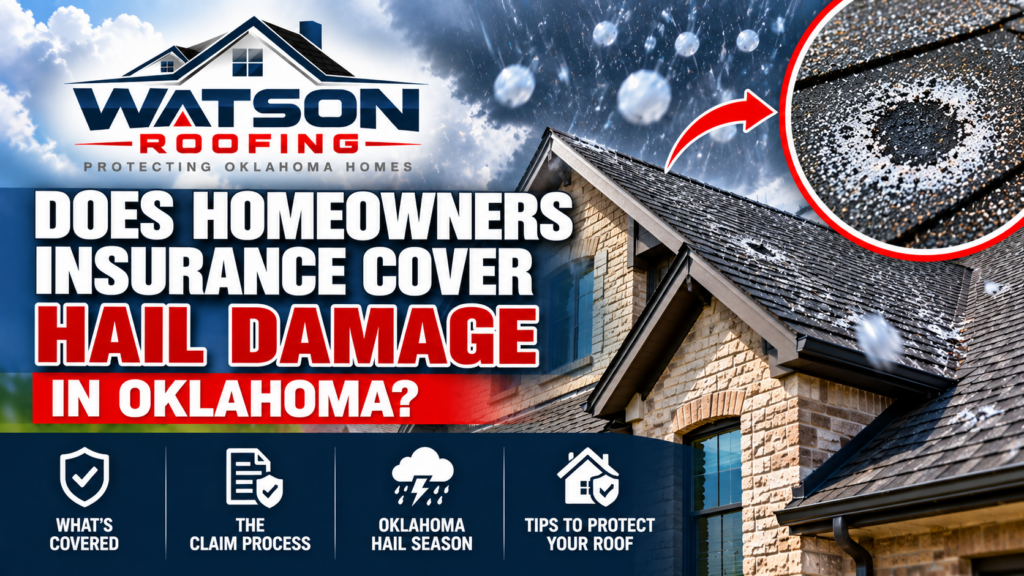
Oklahoma homeowners experience some of the country’s most severe thunderstorms, including damaging hail and high winds. When a major storm passes through Oklahoma City, Yukon, Mustang, Edmond, or surrounding communities, one of the first questions homeowners ask is:
Will my homeowners insurance pay to replace my roof after hail damage?
The answer depends on your insurance policy, the cause and extent of the damage, the age and condition of your roof, and your insurance company’s coverage determination.
At Watson Roofing, we help homeowners identify visible storm damage, understand roofing repair and replacement options, and document roof conditions following severe weather.
Here’s what Oklahoma homeowners should know before filing a hail damage insurance claim.
1. Does Homeowners Insurance Typically Cover Hail Damage?
Many homeowners insurance policies provide coverage for sudden, accidental damage caused by hail or wind.
However, coverage is not guaranteed.
Your insurance company may consider several factors, including:
- Whether hail or wind is a covered cause of loss
- The date of the storm
- The extent of physical damage
- The roof’s age and existing condition
- Applicable deductibles
- Policy exclusions or endorsements
- Whether repairs or replacement are necessary under the policy
Damage caused by normal aging, deterioration, or lack of maintenance is generally treated differently from sudden storm damage.
Your insurance policy and insurer determine whether a claim is covered.
2. What Does Hail Damage Look Like on a Roof?
Hail damage isn’t always easy to identify from the ground.
Some impacts can affect shingles or roofing components without creating an obvious leak.
Common signs that may warrant closer inspection include:
- Missing or displaced shingles
- Cracked or fractured shingles
- Areas of concentrated granule loss
- Dented roof vents or metal flashing
- Damaged gutters and downspouts
- Dents in other exposed metal surfaces
- Water stains or leaks following a storm
Not every dark spot or missing granule indicates hail damage. Aging, manufacturing characteristics, foot traffic, and other conditions can create similar appearances.
A professional roof inspection can help document visible conditions and distinguish possible storm damage from other issues.
For safety, homeowners should avoid climbing onto their roofs after a storm.
3. What Is the Difference Between ACV and RCV Insurance?
Two important terms homeowners may encounter are Actual Cash Value (ACV) and Replacement Cost Value (RCV).
Understanding these terms can help you interpret your insurance estimate.
Actual Cash Value (ACV)
ACV generally reflects the value of damaged property after accounting for depreciation, subject to the terms of the policy.
For example, an older roof may have a lower actual cash value than the cost of installing a new roof.
The amount paid can also be affected by the deductible and other policy provisions.
Replacement Cost Value (RCV)
Replacement cost coverage generally provides for the cost of repairing or replacing covered damaged property with comparable materials, subject to policy limits and conditions.
Some RCV policies initially pay an ACV amount and release eligible recoverable depreciation after qualifying repairs or replacement are completed and required documentation is submitted.
Not every policy provides recoverable depreciation, and deadlines or other conditions may apply.
Important: RCV coverage does not automatically mean the insurer will pay every expense associated with a roof replacement.
4. What Is Recoverable Depreciation?
Recoverable depreciation is the portion of an approved replacement-cost claim that may be paid after covered repairs or replacement are completed, provided the policy’s requirements are satisfied.
Here’s a simplified example:
| Insurance estimate example | Amount |
|---|---|
| Approved replacement cost | $15,000 |
| Depreciation withheld | $4,000 |
| Deductible | $2,000 |
| Initial payment | $9,000 |
| Potential additional depreciation payment | $4,000 |
In this hypothetical example, the homeowner’s total insurance payment could reach $13,000 if the full depreciation amount is recoverable and all policy conditions are met.
The homeowner would generally remain responsible for the $2,000 deductible, plus any noncovered expenses.
Actual claim calculations vary by insurer, policy, repair cost, and documentation.
5. Do Homeowners Have to Pay Their Insurance Deductible?
Generally, yes.
An insurance deductible is the portion of a covered loss that the policyholder is responsible for paying.
Oklahoma homeowners may have a separate wind or hail deductible, which can differ from their standard deductible.
Some deductibles are expressed as a percentage of the home’s insured value rather than a fixed dollar amount.
Before starting repairs, review your declarations page or ask your insurance company to explain your deductible.
Watson Roofing does not promise to waive, absorb, or reimburse insurance deductibles.
6. Should You Get a Roof Inspection Before Filing a Claim?
A roof inspection can help homeowners understand the visible condition of their roofing system before deciding whether to contact their insurer.
During an inspection, a roofing contractor may evaluate:
- Asphalt shingles
- Ridge and hip caps
- Roof vents
- Pipe boots
- Flashing
- Drip edge
- Gutters
- Other accessible roofing components
Photographs and written observations can provide useful documentation.
However, a roofing inspection does not guarantee that an insurance company will approve a claim.
If you suspect damage, review your policy’s notice requirements promptly. Do not delay notifying your insurer when a deadline may apply.
7. What Happens After You File a Hail Damage Insurance Claim?
Although procedures vary by insurance company, the process commonly includes several steps.
Step 1: Report the damage
Contact your insurance company and provide the information requested about the storm and suspected damage.
Step 2: Insurance inspection
The insurer may assign an adjuster to inspect the property and evaluate the reported damage.
Step 3: Coverage determination
The insurance company reviews the claim and determines whether damage is covered under the policy.
Step 4: Review the estimate
If the claim is approved, the insurer may provide an estimate describing the covered repair scope and payment calculation.
Step 5: Plan the roofing work
A roofing contractor can prepare a repair or replacement proposal based on the roof’s condition and the work required.
Step 6: Complete repairs and submit documentation
Depending on the policy, the insurer may request invoices or other documentation before releasing eligible additional payments.
Keep copies of all claim communications, estimates, photographs, and invoices.
8. What If the Insurance Estimate Leaves Out Roofing Materials?
A complete roof replacement may involve more than asphalt shingles.
Depending on the roof and applicable requirements, necessary components may include:
- Starter shingles
- Underlayment
- Ice-and-water protection
- Drip edge
- Valley flashing
- Chimney flashing
- Pipe boots
- Ridge and hip caps
- Ventilation components
- Damaged decking repairs
If a contractor identifies necessary work that is not included in the insurer’s estimate, the homeowner can provide supporting documentation to the insurance company for review.
The insurer determines whether additional work is covered.
Watson Roofing can provide roofing measurements, photographs, and estimates relating to the work we propose. We do not make coverage decisions or act as an insurance adjuster.
9. Can Insurance Deny a Hail Damage Roof Claim?
Yes.
An insurer may deny all or part of a claim for reasons such as:
- Damage not covered by the policy
- Excluded cosmetic damage
- Normal wear and deterioration
- Insufficient evidence of a covered loss
- Policy limitations
- Missed reporting or claim deadlines
A denial does not necessarily mean the roof needs no maintenance or repair.
Homeowners who disagree with a claim decision can request an explanation from their insurer and review available options under their policy.
For disputes involving insurance coverage or claim settlement, consider speaking with a properly licensed insurance professional or attorney.
10. Will Class 3 or Class 4 Shingles Help With Future Hailstorms?
Some Oklahoma homeowners choose impact-resistant shingles when replacing their roofs.
Class 3 and Class 4 classifications describe performance under specific impact testing.
Class 4 is the highest classification under UL 2218, but no asphalt shingle is guaranteed to withstand every hailstorm.
Certain insurance companies may offer discounts for qualifying impact-resistant products.
Discounts, exclusions, and eligibility requirements vary.
Before choosing a roofing product, ask your insurance company whether the specific shingle qualifies for any available discount.
11. How Long Do You Have to File a Hail Damage Claim in Oklahoma?
There is no single filing deadline that applies to every homeowner and every insurance policy.
Your policy may include notice requirements, proof-of-loss deadlines, or other time limitations.
If you believe a storm damaged your roof, review your policy and contact your insurance company promptly.
Waiting too long can make documenting the loss more difficult and may affect your rights under the policy.
12. Why Choose Watson Roofing for a Storm Damage Inspection?
Watson Roofing serves homeowners throughout the Oklahoma City metro area.
Our roofing services include:
- Roof inspections
- Hail and wind damage evaluations
- Roof repairs
- Complete roof replacements
- Impact-resistant roofing options
- Roofing estimates and damage documentation
We work with roofing products from manufacturers including Owens Corning, GAF, IKO, CertainTeed, Malarkey, and TAMKO.
Our goal is to help homeowners understand the condition of their roofs and make informed decisions about repairs or replacement.
Schedule a Roof Inspection in Oklahoma City
If your home has recently experienced hail or high winds, consider having your roof evaluated for visible damage.
Watson Roofing serves:
- Oklahoma City
- Yukon
- Mustang
- Edmond
- Piedmont
- Bethany
- Warr Acres
- El Reno
- Tuttle
- Surrounding Oklahoma communities
Watson Roofing
Call or text: 405-397-7542
Website: https://watsonroofingokc.com/
Oklahoma Roofing Registration #80007875
Contact Watson Roofing to schedule a roof inspection and discuss your roofing repair or replacement options.
Disclaimer: This article provides general educational information and is not insurance or legal advice. Insurance coverage, claim deadlines, and payments depend on individual policies and circumstances. Watson Roofing provides roofing services and related documentation, not public adjusting or legal representation.